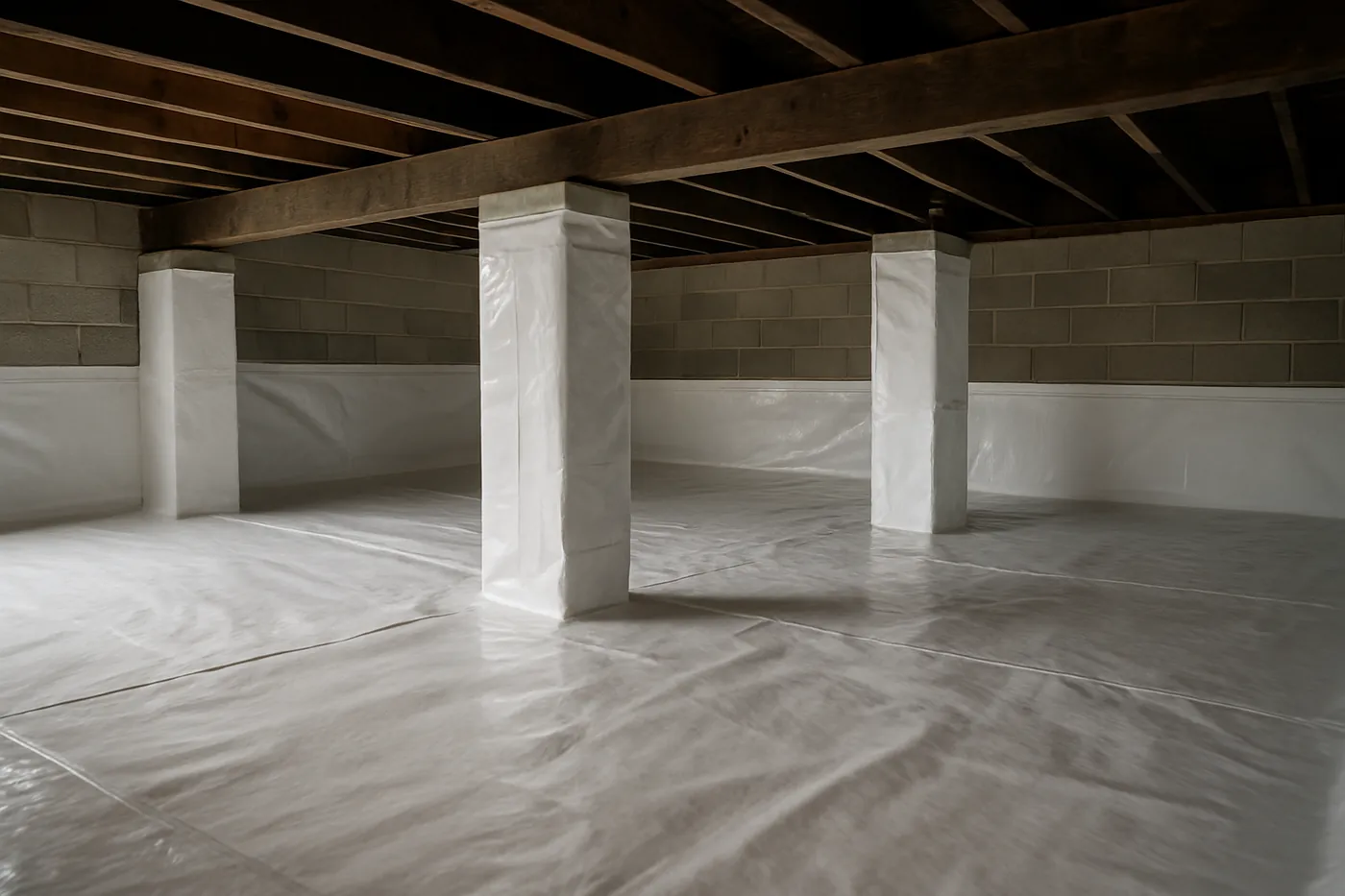
Crawl space encapsulation in Harvest costs $5,500–$15,000 for a complete sealed system holding humidity below 55%. Tennessee Valley subsoil passes under an inch of water an hour, so the water route is solved before the crawl space is sealed.
Graded pads drain into each other
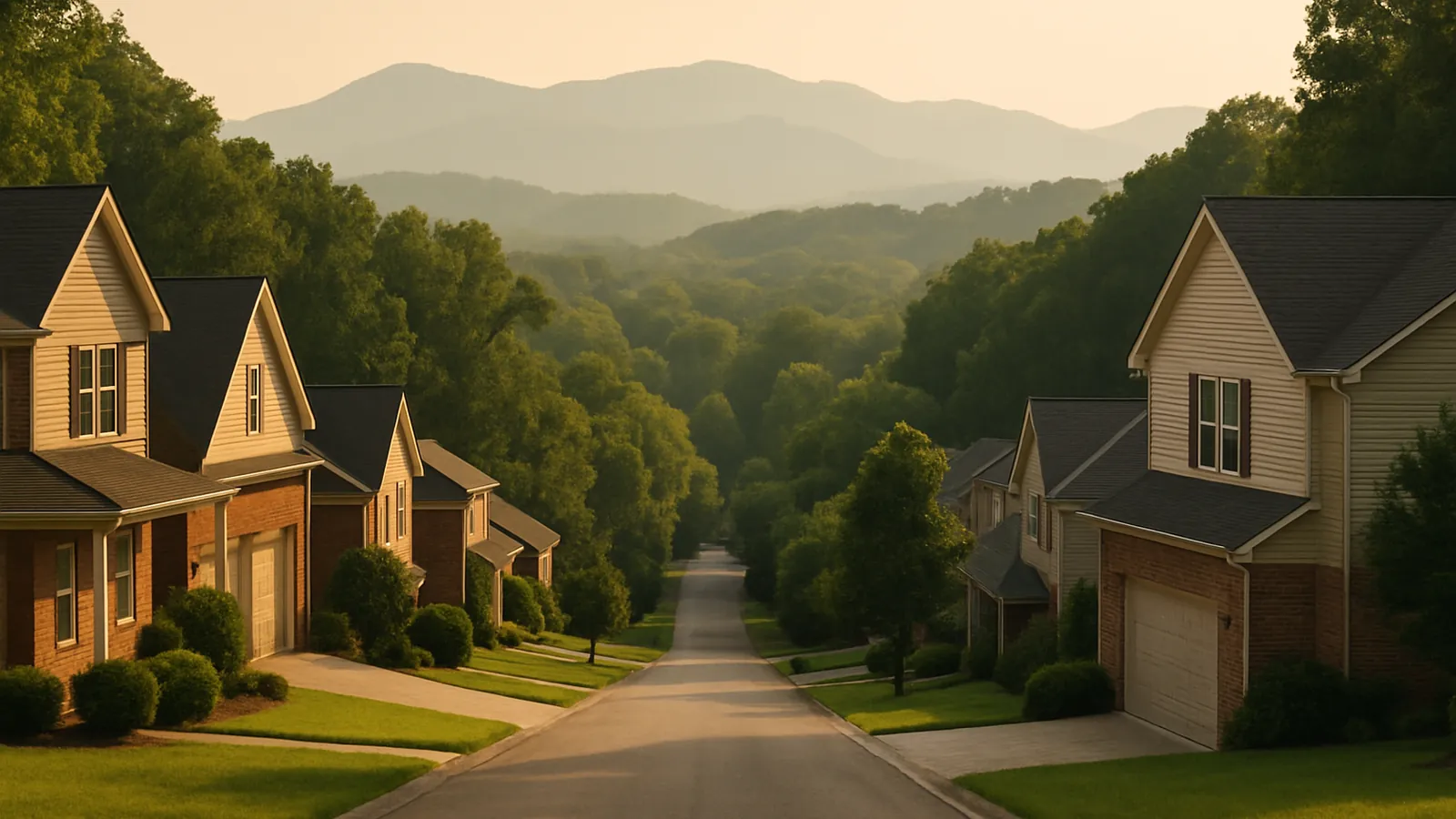
Harvest has absorbed a lot of subdivision development, and subdivision grading is designed as a system rather than lot by lot. Water is intended to move along swales and between houses toward a collection point. That works when the design is intact and stops working when someone regrades a yard, builds up a bed against a foundation, or fences across a swale.
The practical consequence is that a Harvest crawl space taking water sometimes has a cause that is not on the property. Before quoting interior work, it is worth knowing whether the water arriving at your foundation started two lots away and whether the original drainage path is still functioning.
Walk it after the next storm
The most useful thing a homeowner here can do costs nothing: go outside during or right after a real Tennessee Valley thunderstorm and watch where water actually moves. Where it ponds, where it crosses the property line, where it runs toward the house. Ten minutes in the rain beats an hour of speculation afterward.
Bring what you saw to the inspection. It frequently points at an exterior correction costing a few hundred dollars rather than an interior system costing thousands, and the cheaper one that works is the better buy.
Asked in Harvest
How much does crawl space encapsulation cost in Harvest?
A complete sealed system runs $5,500-$15,000, with exterior drainage corrections often a few hundred to a couple thousand on top or, better, instead. In subdivisions the cause is frequently outside the house, and outside fixes are the cheaper ones. Many local specialists don't charge for the inspection; ask when they call.
Water comes toward my house from the neighbor's lot. What now?
First establish whether the subdivision's original drainage path is still intact, because these are designed as a system rather than lot by lot. A regraded yard, a raised bed, or a fence across a swale upstream can redirect water onto you. That is worth knowing before anyone prices interior work.
What should I look at during the next storm?
Where water ponds, where it crosses property lines, and where it runs toward the house. Ten minutes outside in the rain is more diagnostic than an hour of speculation afterward, and what you saw changes what the specialist brings. Photographs on your phone are genuinely useful.
What a Harvest crawl space inspection includes
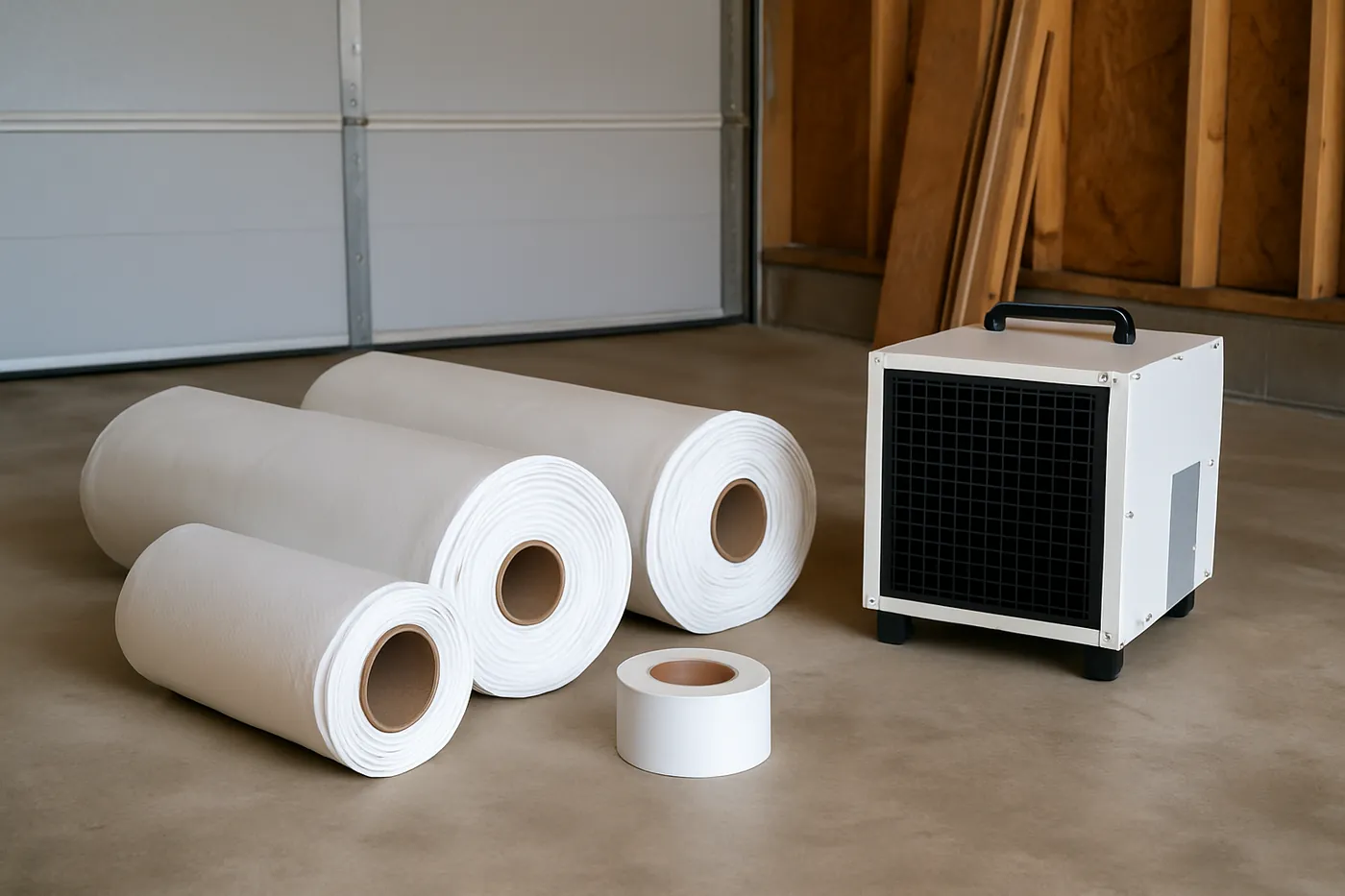
A good inspection goes under the house. Relative humidity and temperature readings, wood moisture content at the joists, girders, and sill, clearance measured at several points, photographs of anything worth seeing, and an exterior walk of where water goes. Ask to keep the numbers whether or not you hire the specialist.
Get a Huntsville crawl space inspection
Tell us what you’re noticing — floors that give underfoot, a room that never gets comfortable, humidity the AC cannot pull down, standing water after a storm — and we’ll pass your request to one independent local specialist serving Huntsville. They call you back to set up an inspection, which should include a moisture meter and a hygrometer.