Crawl space waterproofing in Huntsville runs $2,500–$7,000 for interception and a sealed sump, with exterior corrections often a few hundred. Red clay accepts only about an inch an hour, so storm water saturates the ground beside the foundation and routes into the crawl.
Where the water is actually coming from, the order that costs least, and when a sump is unnecessary.
A routing problem, not a sealing problem
Homeowners usually describe crawl space water as a leak, which suggests a hole to be plugged. That is rarely the situation here. With 54.3 inches falling on it each year and clay that takes water grudgingly, the ground beside a Huntsville foundation saturates during a storm and stays saturated. Saturated soil transmits pressure, and pressure finds block joints, cold joints, and the seam where the wall meets the footing.
That distinction matters because it changes what you buy. There is no plug for a saturated perimeter. What works is giving the water a route that is easier than the route through your crawl space wall, and doing it as far from the house as the lot allows.
Cheapest fixes first, every time
- Downspouts. Roof water discharging beside a foundation on slow-draining clay is the most common cause, and extending the line is usually a few hundred dollars.
- Grade. Soil should fall away from the house over the first several feet. Settled backfill that now slopes inward delivers water directly to the wall.
- Surface interception. On lots taking runoff from higher ground, a swale or curtain drain uphill catches water before it reaches the foundation zone.
- Interior drain tile and sump. Perimeter collection inside the crawl, routed to a sealed sump or daylighted by gravity, for water that cannot be stopped outside.
- Then seal. Encapsulation after the route out is verified through an actual storm.
What the options cost
| Correction | Typical cost | Right when |
|---|---|---|
| Downspout extension and discharge | $150–$600 | Nearly every house here — do it first regardless |
| Regrading the first six feet | $800–$2,500 | Backfill has settled and now slopes toward the house |
| Exterior swale or curtain drain | $2,000–$6,000 | Lot receives runoff from higher ground |
| Interior drain tile with sealed sump | $2,500–$7,000 | Water enters despite exterior work, or exterior work is impractical |
| Gravity daylight discharge | $1,500–$4,000 | Enough fall exists to skip the pump entirely |
The storm test
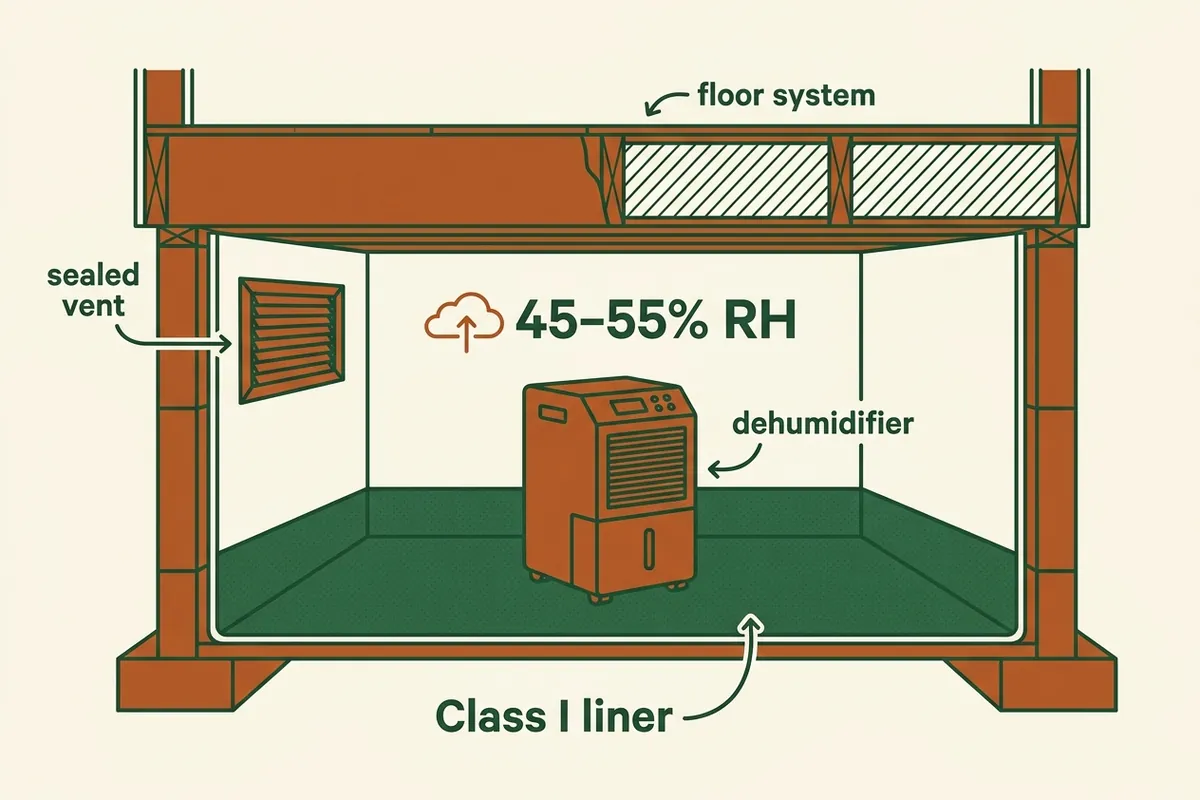
Waterproofing is one of the few trades where the work can be verified directly, and you should verify it. After the route is installed, wait for a real Tennessee Valley thunderstorm and go look. Standing water, active seepage at a joint, or mud tracked across the liner are all visible with a flashlight.
That is also why sealing belongs afterward, once the storm test has passed. A crawl sealed before the storm test hides the evidence you need most, and hiding evidence is how a $3,000 drainage problem becomes a $12,000 argument two years later. Everything is priced in the cost guide.
Waterproofing questions, straight answers
What does crawl space waterproofing cost in Huntsville?
Interior interception with a sealed sump generally runs $2,500-$7,000 depending on how much perimeter needs drain tile and how far the discharge has to travel. Exterior corrections - downspout extensions, regrading, a swale - are often a few hundred to a couple thousand and should always be priced first because they cost the least.
Why does water keep getting into my crawl space?
Because the ground around the house cannot take it fast enough. Red clay here absorbs roughly an inch an hour, so in any real storm the soil beside the foundation saturates and the water goes wherever it can - through block joints, under footings, or straight through the crawl wall. It is a routing problem, not a sealing problem.
Can I just seal the crawl space walls?
Sealants and coatings applied to the inside of a wall resist vapor, not hydrostatic pressure. Water under pressure finds the joint, the crack, or the footing seam and comes through anyway, often lifting the coating on its way. Coatings have a role after water is routed away, not instead of routing it.
Do I need a sump pump?
Only if water has nowhere lower to go. On a sloped lot the collected water can sometimes daylight downhill by gravity, which is more reliable because it does not depend on power. On flat lots around the valley floor a sealed sump with a sound discharge is usually the honest answer. The lot decides, not the catalog.
Should waterproofing happen before encapsulation?
Waterproofing should happen before encapsulation, and this is the single most common sequencing mistake in this market. A sealed crawl over active water traps the water and hands the dehumidifier a load it was never sized for. Solve the route out first, verify it through a storm, then seal. Doing it in that order costs less than doing it twice.
Get a Huntsville crawl space inspection
Tell us what you’re noticing — floors that give underfoot, a room that never gets comfortable, humidity the AC cannot pull down, standing water after a storm — and we’ll pass your request to one independent local specialist serving Huntsville. They call you back to set up an inspection, which should include a moisture meter and a hygrometer.