Crawl space repair in Huntsville runs $1,500–$8,000 for structural work — sistering softened joists, rebuilding girder sections, and re-supporting settled piers. Framing that reads persistently above 20% moisture is where decay fungi stay active, which is common in unsealed valley crawls.
How the wood is assessed, what each repair method is for, and why structural work is scoped alongside moisture rather than after it.
What gets read under the house
Two measurements do most of the diagnostic work. A moisture meter on the joists, girders, and sill gives moisture content, and persistent readings above roughly twenty percent put the wood in the range where decay organisms remain active. A probe gives the other half: sound wood resists moderate pressure, and wood that has lost section strength does not.
Those readings matter more than appearance. Surface staining on a joist frequently means an old event that has since dried, while framing that looks acceptable can be well into strength loss. Reporting a crawl space from photographs alone is guessing with better lighting.
Repair methods and what each is for
| Method | Typical cost | Right when |
|---|---|---|
| Sistering joists | $150–$400 per joist | Localized softening with the member still largely intact |
| Girder or beam section replacement | $1,200–$4,000 | A main carrying member has lost strength over a span |
| New or rebuilt pier supports | $400–$1,200 each | Piers have settled, shifted, or were undersized originally |
| Adjustable steel supports | $500–$1,500 each | Recovering elevation gradually under a sagging span |
| Sill plate replacement | $40–$100 per foot | The plate on top of the foundation wall has decayed |
Where the floor above has dropped, recovery is taken slowly rather than in one lift, because drywall, tile, and trim above have adjusted to the current position.
Why moisture belongs in the same document
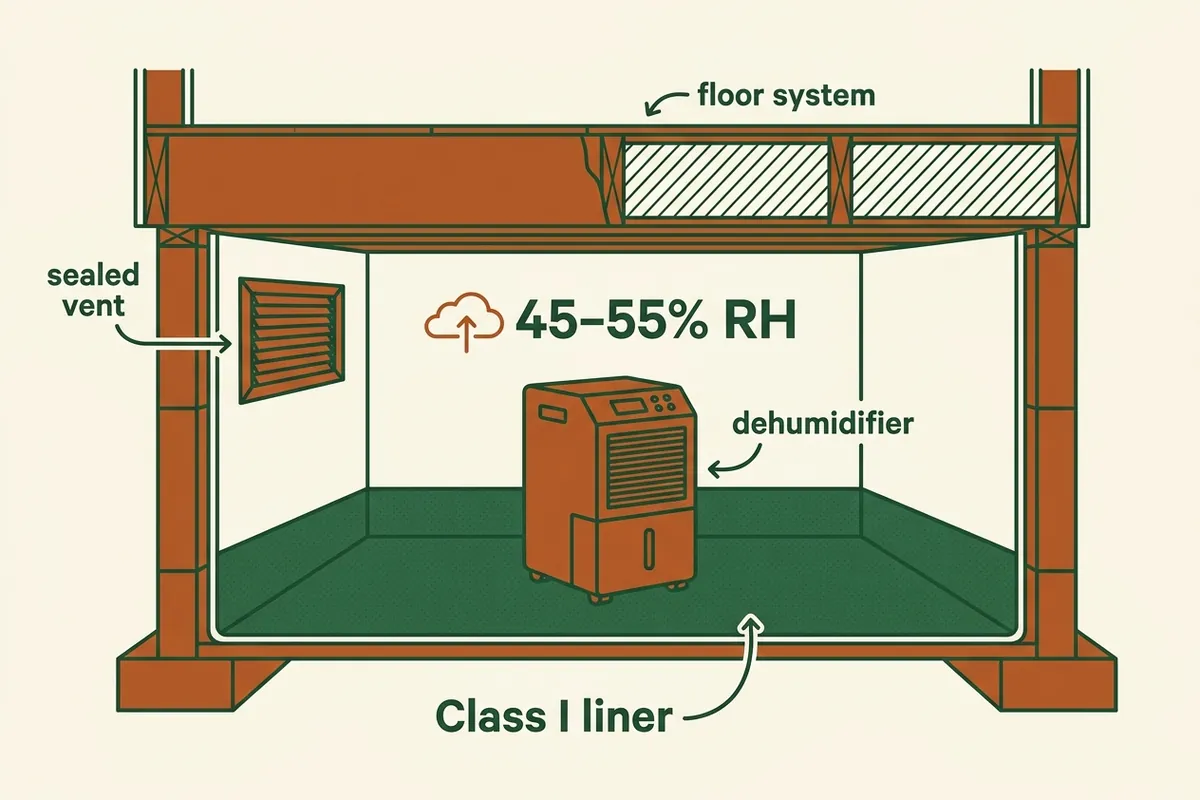
Wood in a Huntsville crawl space does not soften on its own. It softens because the space runs wet, and the space runs wet because water reaches it and cannot leave. Replacing the affected framing without changing that returns the same crawl to the same condition with newer lumber in it.
So a sound structural scope arrives with the moisture side priced beside it — water management where water is entering, and sealing once the route out is verified. You can decline either half. You should not be sold the structural half without being told the other exists.
Living with the work
Most crawl repairs are done from below with the household in place. Noise happens directly under whichever room is being worked, elevation recovery is taken over several days where it is part of the scope, and access is through the existing crawl door in nearly every case. Ask for timelines in the written scope. Every price appears in the cost guide.
Crawl space repair questions, straight answers
What does crawl space repair cost in Huntsville?
Structural crawl work generally runs $1,500-$8,000, from sistering a few softened joists to replacing girder sections on new supports. The number tracks how much wood has lost strength and how much of the support system has to be rebuilt while the floor above is held. Access difficulty is the other real variable.
How do I know if the wood under my floor is compromised?
Moisture content and a screwdriver. Framing that reads persistently above roughly 20% moisture is in the range where decay fungi stay active, and wood that has actually lost strength gives way under moderate probe pressure rather than resisting it. Both readings belong in a good inspection, and both should go in your written report.
Can piers be replaced without lifting the house?
Support is transferred, not removed. Temporary shoring carries the load while a pier or girder section is rebuilt, then the load is returned to the new support. Where the floor has dropped, recovery is taken in slow increments over days so finishes above have time to adjust rather than crack.
Will fixing the wood stop it happening again?
Only if the moisture that softened it is addressed at the same time. Replacing decayed framing in a crawl that still runs wet buys a few years and the same conversation. That is why a structural scope should be written alongside water management and sealing rather than as a standalone repair.
Can homes with very low clearance be worked on?
Usually, though tight clearance affects both cost and method. Under roughly eighteen inches, material handling and equipment access become the limiting factor, and some scopes require excavating a working trench. Ask during the inspection whether clearance is a cost driver on your house rather than discovering it later.
Get a Huntsville crawl space inspection
Tell us what you’re noticing — floors that give underfoot, a room that never gets comfortable, humidity the AC cannot pull down, standing water after a storm — and we’ll pass your request to one independent local specialist serving Huntsville. They call you back to set up an inspection, which should include a moisture meter and a hygrometer.